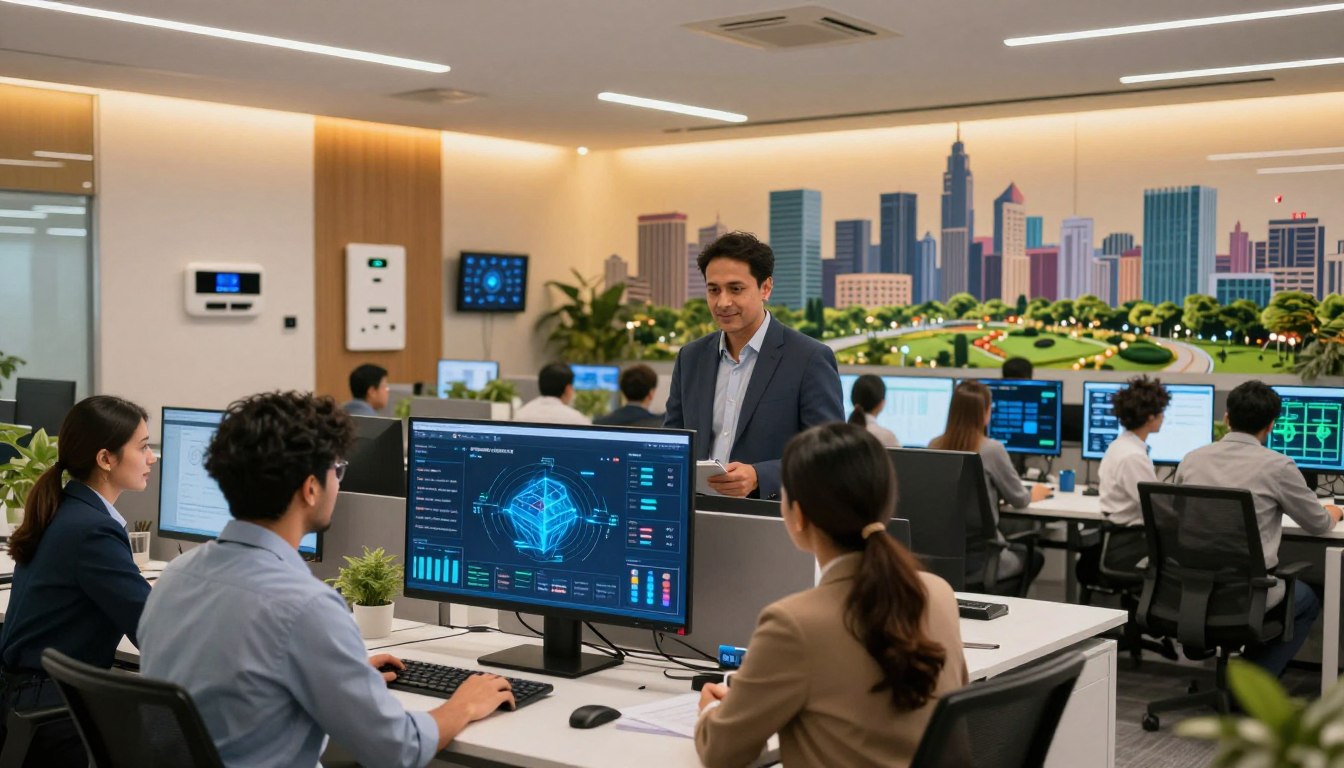
Facility Management Trends in Pune are shaping the future of commercial and industrial infrastructure. Pune has emerged as a significant hub for IT, manufacturing, and education in India, driving the demand for efficient and sustainable facility operations. The city’s growth has transformed the facility management landscape, making it more complex and challenging.
As Pune continues to evolve as a major commercial and IT destination, the facility management sector is undergoing significant transformation. By 2026, it is expected to be characterized by technological innovation and sustainability initiatives.
The evolution of Pune’s commercial infrastructure is creating new demands for sophisticated facility services that can address complex operational challenges. This comprehensive analysis examines the key trends shaping facility management practices in Pune.
Key Takeaways
- The facility management landscape in Pune is transforming due to the city’s growth as a commercial and IT hub.
- Technological innovation and sustainability initiatives will define facility management by 2026.
- Pune’s commercial infrastructure evolution demands sophisticated facility services.
- Facility management is becoming a strategic asset for businesses in Pune.
- The trends shaping facility management practices in Pune will be crucial for stakeholders.
The Evolution of Facility Management in Pune
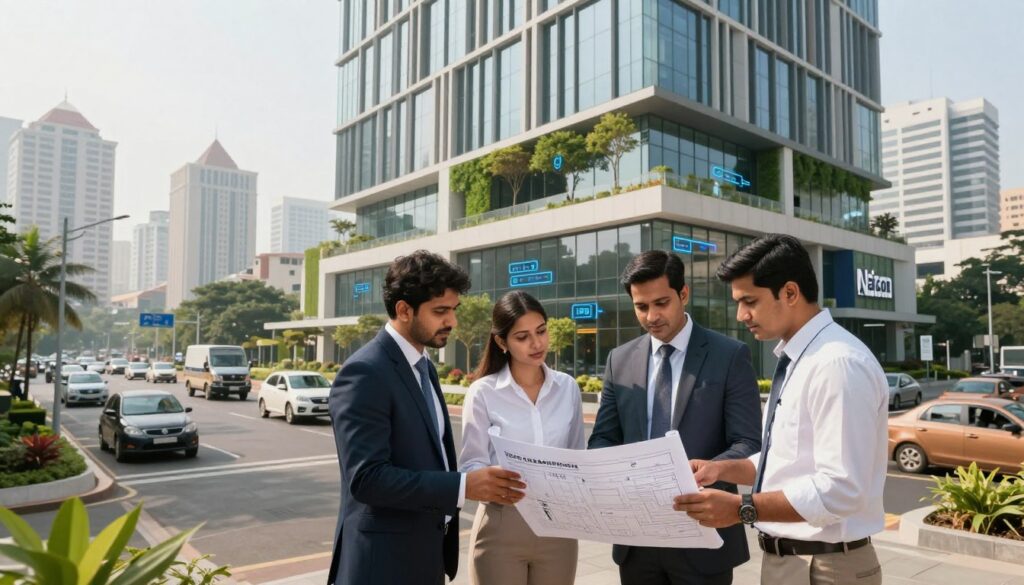
The city’s transition from an educational hub to a diverse commercial ecosystem has created new challenges and opportunities for facility management companies. Pune, once primarily known for its educational institutions and cultural roots, has now become a major commercial and IT destination in India.
Pune’s Growth as a Commercial Hub
Pune has transformed into a thriving commercial center with IT parks, manufacturing hubs, and corporate campuses, requiring specialized facility management services. The city’s rapid expansion in areas like Hinjewadi, Kharadi, and Magarpatta has created unique challenges that demand localized expertise and global standards.
Shifting Demands in Facility Management Services
The management of facilities in Pune has evolved to meet the changing needs of businesses. Traditional maintenance services have given way to strategic facility management solutions that directly impact business continuity, employee productivity, and operational efficiency. Client expectations have shifted from basic maintenance to comprehensive solutions that address sustainability, technology integration, and employee experience.
Digital Transformation and Smart Buildings
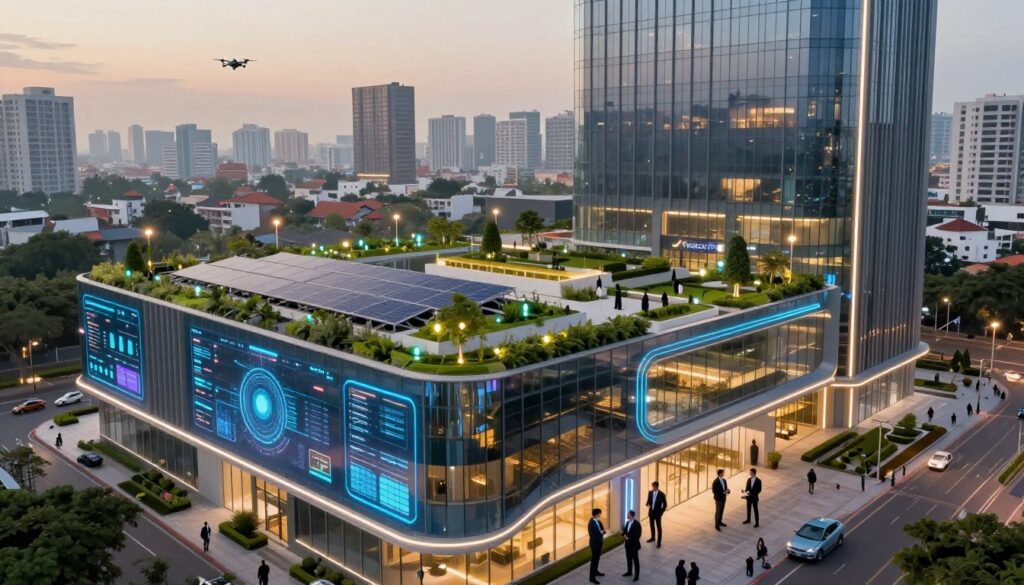
The integration of digital infrastructure in Pune’s buildings is enhancing operational efficiency and redefining facility management. This transformation is driven by the adoption of smart technologies and integrated systems.
IoT Integration in Building Management
The use of Internet of Things (IoT) in building management is becoming increasingly prevalent. By 2026, IoT integration will become standard in Pune’s commercial buildings, with interconnected sensors monitoring everything from occupancy patterns to equipment performance in real-time.
Automated Systems for Operational Efficiency
Automated systems are being implemented to optimize facility management operations. Smart building management systems enable teams to optimize resource allocation, predict maintenance needs, and reduce operational costs through automated decision-making, leveraging advanced technology.
Key trends include the adoption of automated HVAC and lighting systems, IoT-based asset tracking, and smart access controls. These advancements are transforming the management of facilities in Pune, enhancing overall efficiency.
Sustainability and ESG Compliance
In Pune’s rapidly expanding commercial and industrial sectors, facility management is playing a crucial role in achieving sustainability and ESG targets. As companies grow, their environmental footprint and social responsibilities become more significant.
Green-Certified Operations
Green building certifications like LEED and IGBC are becoming standard requirements for premium commercial spaces. Facility managers are implementing comprehensive sustainability programs to achieve these certifications, focusing on energy efficiency and reducing waste.
Carbon Footprint Reduction Strategies
To reduce their carbon footprint, companies are adopting various strategies, including energy-efficient lighting and HVAC systems, as well as implementing waste segregation and recycling programs. By 2026, ESG compliance will be a non-negotiable aspect of facility management in Pune.
| Strategy | Description | Benefit |
|---|---|---|
| Energy Efficiency | Implementing energy-efficient systems and real-time monitoring | Reducing energy consumption by up to 30% |
| Waste Segregation | Implementing comprehensive waste segregation and recycling programs | Reducing waste sent to landfills |
| Water Conservation | Integrating rainwater harvesting and greywater recycling systems | Reducing water consumption |
By focusing on sustainability and ESG compliance, facility managers in Pune can not only reduce their environmental impact but also enhance their operational efficiency and contribute to a more sustainable future.
Integrated Facility Management Solutions
The shift towards integrated facility management solutions is revolutionizing the way businesses in Pune manage their facilities. As companies look for more streamlined and efficient ways to manage their operations, the demand for comprehensive facility management services is on the rise.
Benefits of End-to-End Service Models
End-to-end service models offered by facility management companies provide numerous benefits, including streamlined communication, reduced administrative overhead, and the elimination of service gaps between different providers. By opting for integrated solutions, businesses can enjoy lower vendor management costs and improved service consistency across all operational areas.
- Streamlined communication and reduced administrative overhead
- Elimination of service gaps between different providers
- Lower vendor management costs
- Improved service consistency across all operational areas
Streamlining Vendor Management
One of the key advantages of integrated facility management solutions is the ability to streamline vendor management. By consolidating services under a single provider, businesses can simplify their operations and reduce complexity. This approach not only improves accountability but also ensures consistent service quality across all areas, from technical services and engineering to housekeeping services in Pune and security.
As Pune continues to grow as a commercial hub, the adoption of integrated facility management solutions is expected to increase. Facility management companies that offer comprehensive management services and solutions will be well-positioned to meet the evolving needs of businesses in the region.
Tech-Enabled Housekeeping Services
The future of facilities management in Pune is being shaped by advancements in housekeeping technologies. As commercial spaces continue to evolve, the demand for efficient, high-quality cleaning services is on the rise.
Robotic and Automated Cleaning Solutions
Manual processes in cleaning and maintenance are being replaced by automation and mechanized solutions, especially in high-traffic areas like IT parks, malls, and healthcare facilities. Robotic floor scrubbers and vacuums are becoming increasingly common, improving efficiency and reducing labor costs.
- By 2026, robotic cleaning equipment is expected to handle up to 60% of routine cleaning tasks in large commercial facilities across Pune.
- AI-powered cleaning schedules will optimize resource allocation based on occupancy patterns and usage intensity.
Eco-Friendly Cleaning Protocols
In addition to automation, there’s a growing emphasis on eco-friendly cleaning protocols. Facilities management providers are adopting chemical-free and biodegradable cleaning solutions to align with broader sustainability goals.
- UV-C disinfection technologies and electrostatic sprayers will become standard for high-touch surfaces and critical areas.
- Digital quality management systems will enable real-time monitoring of cleaning activities, ensuring transparency and accountability for service delivery.
These innovations are set to enhance the overall quality of housekeeping services in Pune, making them more efficient and sustainable.
Workforce Development in Facility Management
As Pune continues to grow as a commercial hub, the demand for skilled facility management professionals is on the rise. The future of facility management companies in Pune lies in developing a knowledgeable workforce equipped to handle modern demands.
E-Learning and Certification Programs
Digital learning platforms are revolutionizing training delivery for facility management staff. By 2026, personalized learning paths and micro-credentials are expected to become industry standards. Management companies are investing heavily in upskilling programs that develop both technical competencies and soft skills.
- E-learning platforms for on-site staff
- Certifications in EHS (Environment, Health & Safety) and sustainability
- Language and customer service skills for better client interaction
Cross-Functional Training Approaches
Cross-functional training is creating versatile facility management professionals capable of handling multiple service areas. This approach improves operational flexibility and career advancement opportunities for employees. Certification programs in specialized areas like energy management and smart building technologies are becoming prerequisites for career advancement.
| Training Approach | Benefits |
|---|---|
| E-Learning | Personalized learning paths, micro-credentials |
| Cross-Functional Training | Operational flexibility, career advancement |
Data-Driven Decision Making
With the advent of advanced analytics, facilities management in Pune is becoming more proactive. The industry is shifting from reactive to proactive strategies, driven by real-time data and analytics, enabling providers to predict issues, track performance, and optimize resource allocation.
Predictive Maintenance Through Analytics
Predictive maintenance algorithms analyze equipment performance data to forecast failures weeks in advance. This approach can reduce emergency repairs by up to 70% and extend asset lifecycles, significantly improving facilities management operations.
Performance Benchmarking and Optimization
Facilities management providers will compare operational metrics across similar properties to identify optimization opportunities. Machine learning models will continuously analyze building performance data to recommend efficiency improvements and maintenance interventions, enhancing overall operations and enabling real-time monitoring.
Health, Safety, and Hygiene Priorities
The post-pandemic era has brought health and hygiene to the forefront of facility management priorities in Pune. Businesses are now focusing on creating a safe environment that ensures the well-being of employees and visitors alike.
Enhanced Sanitization Standards
Health and safety protocols established during the pandemic are evolving into permanent practices. By 2026, enhanced sanitization standards will become the new baseline, with frequent disinfection of common areas being a key focus area. Advanced sanitization techniques and protocols will be implemented to maintain a clean and safe environment.
Indoor Air Quality Monitoring
Advanced indoor air quality monitoring systems will be deployed to continuously measure particulate matter, VOCs, CO2, and pathogens. These systems will enable automated ventilation adjustments to maintain optimal indoor air quality, thereby enhancing the overall safety and health of occupants.
By integrating comprehensive safety management systems, Pune’s businesses can ensure a secure and healthy environment. This includes incorporating mental health considerations into facility design and management, with elements like proper lighting and acoustic management becoming standard safety considerations.
Facility Management Trends in Pune for 2026
As we approach 2026, Pune’s facility management landscape is poised for significant transformation driven by technological advancements. The integration of AI and automation is revolutionizing the way facility management services are delivered, making them more efficient and cost-effective.
AI and Automation Integration
AI-driven predictive maintenance is transforming the facility management industry. By analyzing data from sensors and IoT devices, AI can predict equipment failures before they occur, allowing companies to perform maintenance proactively. This reduces downtime, extends the lifespan of assets, and lowers maintenance costs.
Blockchain for Contract Management
Blockchain technology is gaining traction in Facilities Management India for its potential to enhance transparency and security. It will revolutionize contract management and vendor relationships, creating transparent, immutable records of all service agreements, performance metrics, and payments.
| Trend | Description | Impact |
|---|---|---|
| AI and Automation | Autonomous management of routine operations | Increased efficiency and reduced costs |
| Blockchain | Transparent and secure contract management | Enhanced trust and reduced disputes |
| Flexible Space Management | Adaptable space solutions for changing workplace needs | Improved employee experience and productivity |
Client Experience Enhancement Strategies
The future of facility management in Pune hinges on delivering exceptional client experiences. Facility managers are now expected to contribute to the workplace experience through faster service, cleaner spaces, seamless interactions, and a sense of comfort.
Mobile Apps for Service Requests
Mobile applications will give occupants direct control over their workplace experience, allowing them to adjust environmental settings, report issues, and provide feedback in real-time. This shift towards mobile-enabled service requests will significantly enhance the overall experience for clients.
Personalized Facility Management Solutions
Facility managers will leverage user experience design principles to create intuitive, frictionless interactions between building occupants and facility services. Personalization will extend to all aspects of facility management, with service delivery tailored to individual preferences, departmental needs, and business requirements.
| Strategy | Description | Benefit |
|---|---|---|
| Mobile Apps | Real-time issue reporting and feedback | Enhanced client experience |
| Personalized Services | Tailored to individual and departmental needs | Increased satisfaction and productivity |
| Data Analytics | Continuous improvement through sentiment analysis | Refined service delivery and innovation |
By 2026, client experience will be a primary differentiator among facility management providers in Pune, with service excellence becoming as important as operational efficiency. Data analytics will enable continuous improvement of the client experience, driving business success.
Localized Service Models in Pune’s Micro-Markets
Pune’s expanding micro-markets, such as Hinjewadi and Kharadi, require customized facility management approaches that address local challenges. As the city continues to grow into distinct areas like Baner and Magarpatta, management companies must tailor their solutions to suit localized needs and compliance requirements.
Area-Specific Approaches
Area-specific facility management approaches will account for local infrastructure limitations, traffic patterns, and workforce availability. This tailored strategy ensures optimized service delivery across Pune’s diverse market segments.
Compliance with Local Regulations
Regulatory compliance will become increasingly complex as different areas within Pune implement varying environmental, safety, and building management requirements. Management companies will need to build dedicated teams with deep knowledge of specific geographic areas.
| Micro-Market | Localized Needs | Compliance Requirements |
|---|---|---|
| Hinjewadi | Peak hour service schedules | PMC waste management regulations |
| Kharadi | Language-specific training for staff | Environmental safety protocols |
| Baner | Custom cleaning protocols for offices | Building management regulations |
Strategic Partnerships and Value-Added Services
As facility management companies in India evolve, they are shifting their focus towards strategic partnerships and value-added services. This shift is driven by the need to move beyond traditional operational services and become strategic advisors on workspace optimization, sustainability, and employee experience.
Facility management companies are now partnering with providers to offer a range of value-added services. These include energy audits and sustainability consulting, as well as workspace planning and design advisory.
Energy Audits and Sustainability Consulting
Energy management consulting is emerging as a high-value service offering. Facility management companies are providing comprehensive energy audits, efficiency recommendations, and implementation support to help clients reduce their energy consumption and carbon footprint.
Workspace Planning and Design Advisory
Workspace planning and design advisory services are helping clients adapt to evolving work patterns. Facility management expertise is informing decisions about space utilization and infrastructure requirements, enabling businesses to create more efficient and effective workspaces.
| Value-Added Services | Description | Benefits |
|---|---|---|
| Energy Audits | Comprehensive energy audits and efficiency recommendations | Reduced energy consumption and costs |
| Workspace Planning | Expertise in space utilization and infrastructure requirements | Improved workspace efficiency and employee productivity |
By forming strategic partnerships and offering value-added services, facility management companies in India are positioning themselves as strategic contributors to business success.
Conclusion: The Future of Facility Management in Pune
As Pune’s facility management landscape continues to evolve, it’s clear that the future belongs to those who innovate and adapt. The management of facilities is becoming increasingly complex, with companies demanding more than just basic services. Service quality is now a top priority, driving facility management professionals to upskill and reskill.
By embracing technological advancements and integrated service models, forward-thinking companies will lead the way in creating efficient, sustainable, and people-centric facilities. As the industry evolves, facility management will remain a critical component of business success, with a focus on delivering consistent value and exceptional service quality as a top priority.
About Naicon FMS – Facility Management Trends in Pune
Naicon FMS is a leading facility management solutions provider based in Pune, India, offering comprehensive services that encompass corporate housekeeping, security services, deep cleaning, façade cleaning, labour contracting, and specialised facility support tailored to modern organisational needs. With a strong focus on evolving industry trends such as automation, green cleaning technologies, and integrated service platforms, Naicon FMS helps businesses stay updated with efficient, cost-effective facility management practices. Our expert teams deliver customised solutions across Pune, Pimpri Chinchwad (PCMC), Nigdi, Akurdi, and prominent industrial areas including Chakan MIDC, Bhosari MIDC, Talegaon MIDC, Ranjangaon MIDC, and other major MIDCs in Maharashtra, ensuring a safe, hygienic and productive environment for corporate, industrial and commercial facilities.
