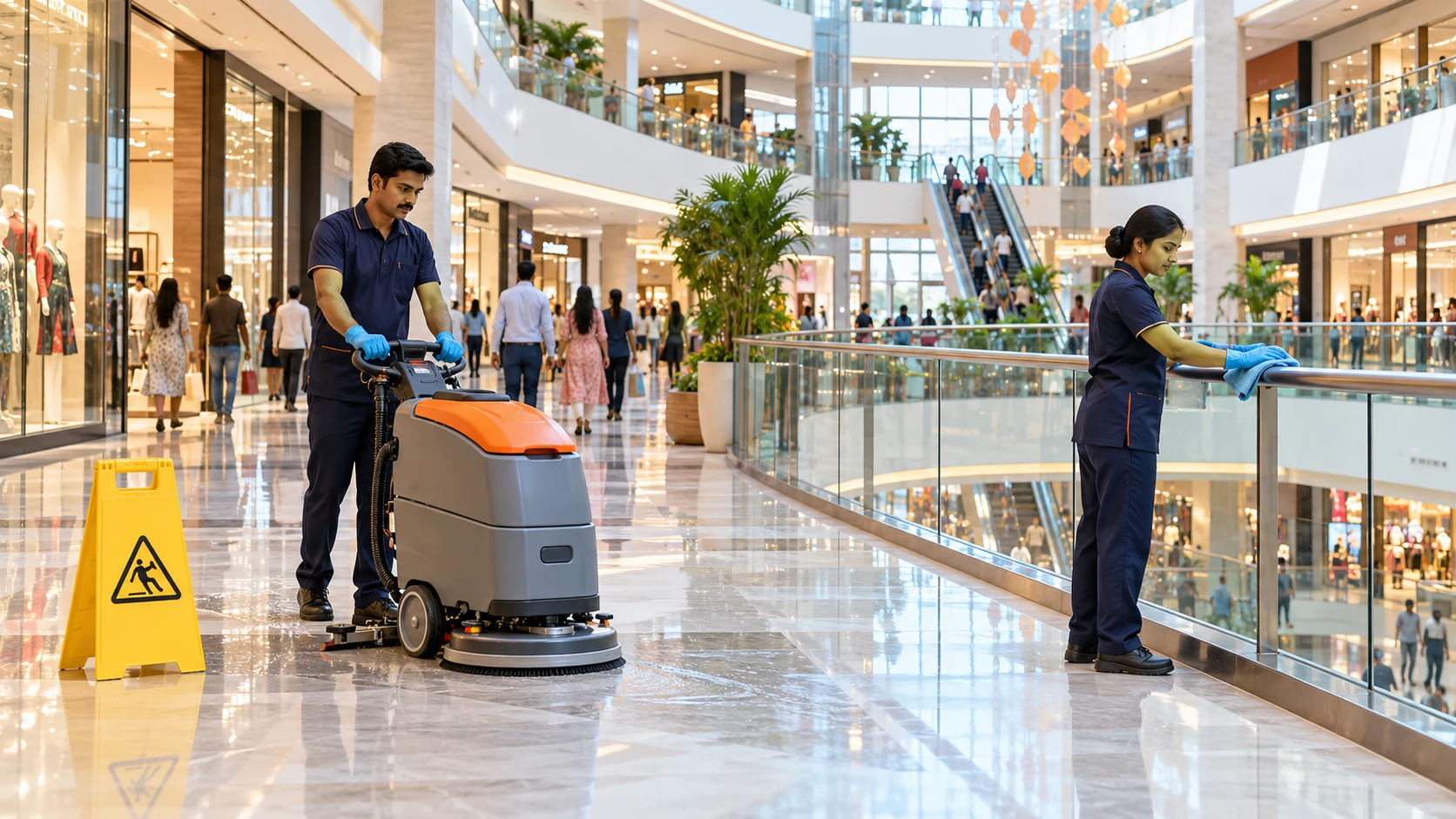
Shopping Mall Cleaning: Improving Customer Experience and Brand Image
Shopping Mall Cleaning shapes how visitors experience a property before they enter a store. Clean entrances, fresh washrooms and well-maintained food courts help people feel comfortable, while litter, spills and unpleasant odours can interrupt an otherwise enjoyable visit. For mall owners and property managers in Pune and Pimpri-Chinchwad (PCMC), housekeeping is part of everyday customer service, not simply a task completed after closing.
A Shopping Mall brings multiple retailers and shared amenities together. Those shared spaces need coordinated attention throughout operating hours. A practical cleaning plan combines trained people, suitable equipment and regular checks without obstructing customers or tenant operations.
Why Shopping Mall Cleaning Is Important
Malls accommodate changing footfall, deliveries, food service and entertainment activities. Dirt enters on shoes, waste accumulates near seating, and accidental spills require prompt attention. Without clear responsibilities, small issues can spread between shifts or remain unnoticed during busy periods.
Planned Shopping Mall Cleaning helps maintain usable facilities and identify concerns such as leaking dispensers, damaged floor surfaces or overflowing bins. It also supports coordination between housekeeping, maintenance, security and tenants. During Pune's monsoon, entrance mats and wet-floor monitoring become particularly important because moisture can travel beyond the doorway.
How Cleanliness Improves Customer Experience
Visitors notice whether they can find a clean table, use a stocked washroom and walk through unobstructed corridors. Families, older visitors and people using mobility aids benefit from clear routes and carefully managed cleaning zones. Visible housekeeping staff also provide a straightforward way to report a spill.
Cleaning should be discreet without becoming invisible. Use quieter equipment where practical, position carts away from shop entrances and schedule intensive work outside peak hours. After a spill, isolate the area, remove the contamination and reopen it only when the surface is ready for use.
Essential Areas That Require Regular Mall Cleaning
Entrance, Lobby, and Common Areas
Remove tracked-in dust, empty entrance bins and check mats frequently. Sweep or vacuum before mopping so loose grit is not dragged across flooring. Inspect seating, directories and corridor edges during patrols. Floor finishes should be selected for the surface and used according to manufacturer instructions, rather than applied solely for shine.
Food Courts and Dining Areas
Clear tables between users and clean food spills promptly. Separate table-cleaning tools from washroom equipment, and coordinate with food operators over waste collection and back-of-house responsibilities. Where a sanitising product is appropriate, follow its dilution, contact-time and food-contact instructions. Do not mix chemicals or leave cleaning products near food.
High-Touch Surfaces and Hygiene Maintenance
Include door handles, lift buttons, handrails, payment-area touchpoints and shared seating in the cleaning schedule. Remove visible dirt before any additional disinfection required by the property's hygiene plan. Frequency should reflect usage and observed conditions. Maintain separate, clearly identified cloths and tools for different zones to reduce cross-contamination.
Escalators, Elevators, and Staircases
Keep landings and stair treads free of litter. Clean lift interiors without allowing liquid into controls or door mechanisms. Escalator cleaning needs coordination with authorised maintenance personnel, appropriate isolation and equipment suitable for the machine. Never clean moving mechanisms using improvised methods or leave cords across public access routes.
Retail Stores and Glass Surfaces
Agree with tenants who cleans storefront glazing, thresholds and display-facing surfaces. Remove fingerprints using suitable tools without spraying near electrical fittings or merchandise. High-level glass requires a planned access method and trained personnel. Retail Cleaning Services should respect store opening times, stock protection and the privacy of occupied premises.
Benefits of Professional Mall Housekeeping Services
Professional Mall Housekeeping Services provide an organised way to assign zones, shifts, supervision and equipment. A written scope helps managers distinguish routine patrols from periodic work such as machine scrubbing, upholstery cleaning and high-level dust removal. It also makes coverage during staff leave easier to discuss.
Training should cover chemical handling, personal protective equipment, safe lifting, customer interaction and incident reporting. Equipment must suit the floor material and available access. Supervisors should inspect completed work, record exceptions and organise corrective action. These practices support consistent service delivery without relying on individual staff members to remember every task.
How Retail Cleaning Services Protect Brand Image
A property's shared spaces influence perceptions of every tenant within it. Smudged glass, neglected corners and persistent bin odours can undermine the care retailers put into their own premises. Consistent Retail Cleaning Services help present a coherent, well-managed environment across entrances, corridors and amenities.
Cleaning does not guarantee sales or positive reviews. However, it removes avoidable distractions from the shopping experience. Property managers should review recurring complaints alongside inspection findings and tenant feedback, then adjust staffing or cleaning methods where patterns indicate a genuine service gap.
Shopping Mall Cleaning Checklist
- Before opening: inspect entrances, remove litter, clean accessible glass and prepare washrooms.
- During operating hours: patrol busy routes, respond to spills, clear food-court tables and monitor bins.
- Washrooms: check cleanliness, odours, consumables, dispensers, drainage and floor dryness at documented intervals.
- Waste management: separate waste according to the site's collection arrangements and applicable local requirements; keep collection areas clean.
- After closing: complete planned floor maintenance, edge cleaning and tasks requiring restricted access.
- Periodic checks: inspect equipment, review high-level cleaning needs and verify that corrective actions were completed.
Use a checklist with the location, responsible person, inspection time and action taken. Increase checks during weekends, festivals and promotions. A signed sheet should support an actual inspection, not replace one.
Choosing the Right Shopping Mall Cleaning Company in Pune and PCMC
Start with a site survey and a clear explanation of operating hours, floor finishes, tenant boundaries and peak visitor periods. Ask prospective providers how they calculate staffing, supervise shifts and respond to urgent spills. Request an equipment plan and details of induction, refresher training and replacement staffing.
For properties in Pune and PCMC, discuss travel, shift handovers and realistic coverage across the facility. Commercial sites connected with the Chakan MIDC area may have different access and operational requirements from a city mall. Compare proposals against the same scope, including consumables, periodic cleaning, reporting and exclusions, rather than price alone.
How Naicon FMS Supports Commercial Facility Cleaning
Naicon FMS provides facility management support for businesses and commercial properties. Its services can help organisations manage housekeeping, cleanliness and day-to-day facility operations. Owners and managers can discuss their requirements for Shopping Mall Cleaning, shared-area upkeep and coordinated site support in Pune and Pimpri-Chinchwad.
Explore Naicon FMS Facility Management Services for warehouse and mall cleaning, then contact the team to discuss the property, expected scope and suitable service arrangements. Agreeing responsibilities and review points early helps establish a workable cleaning plan.
Conclusion
Effective mall cleaning combines scheduled maintenance with responsive attention during the day. Clean amenities, safely managed floors and clear responsibilities support a more comfortable visitor experience and a cared-for brand image. Review the plan as footfall and tenant needs change, and assess results through inspections and feedback.
Frequently Asked Questions
Why is shopping mall cleaning important for customer experience?
It keeps shared spaces comfortable and usable, reduces avoidable mess and helps visitors access clean washrooms, tables and walking routes.
What areas should be included in a shopping mall cleaning checklist?
Cover entrances, common areas, food courts, washrooms, lifts, escalators, staircases, glass, high-touch surfaces and waste collection areas.
How often should shopping mall washrooms be cleaned?
Set inspection and cleaning intervals around footfall, opening hours and observed conditions. Increase checks during peaks and address spills or supply shortages immediately.
What are the benefits of professional mall housekeeping services?
They organise trained staff, appropriate equipment, supervision, shift coverage and quality checks around an agreed scope of work.
How can shopping malls choose reliable retail cleaning services in Pune and PCMC?
Compare site-specific staffing plans, training, supervision, equipment suitability, reporting and clear contractual responsibilities before appointing a provider.
