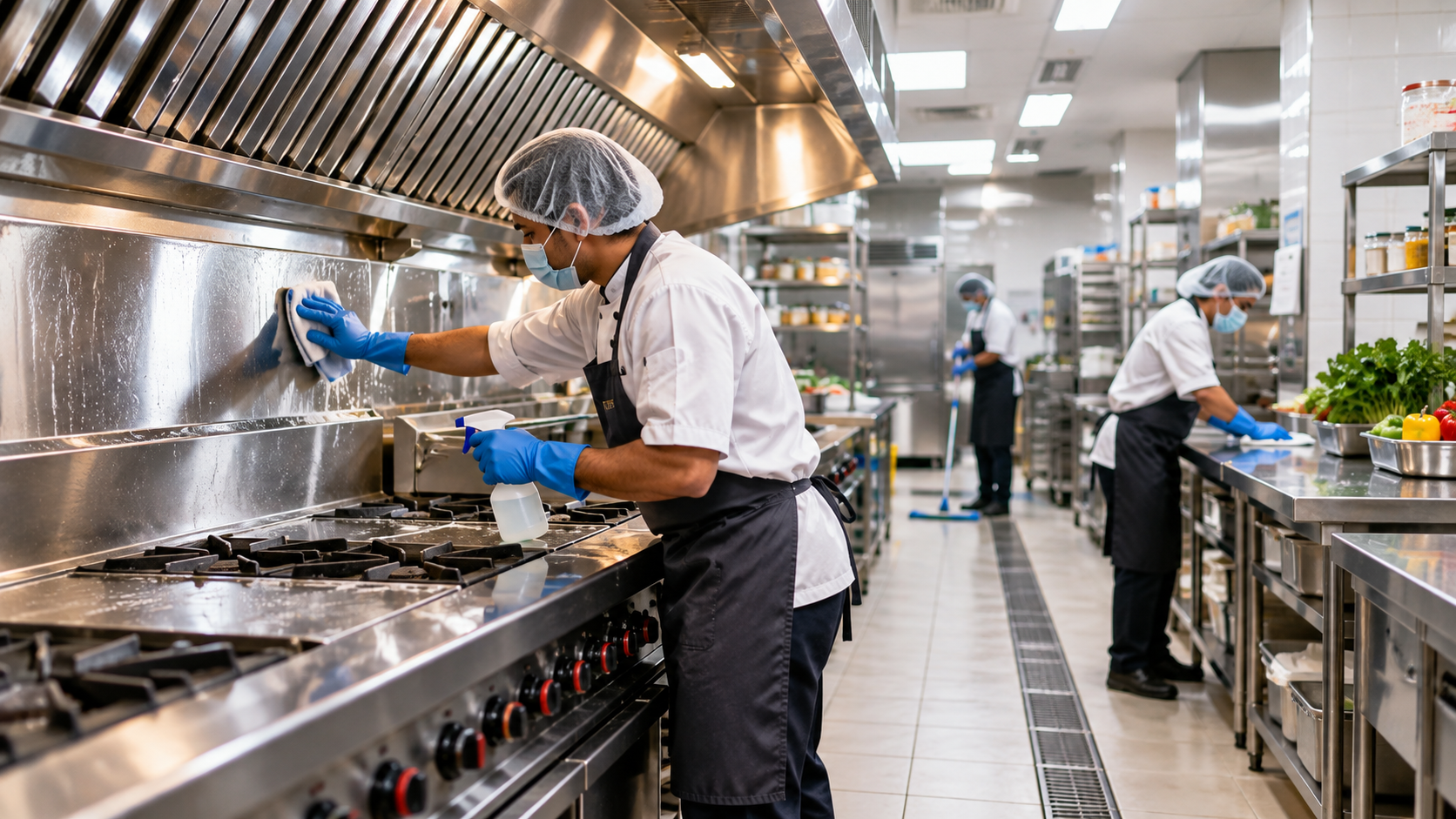
High cleanliness standards are a core duty for every successful food establishment in India. Prioritizing restaurant kitchen hygiene in Pune helps each meal meet strict safety rules and protects patrons from foodborne illness. Regular kitchen deep cleaning service helps maintain hygienic cooking and preparation areas, while a professional kitchen degreasing service can effectively remove built-up grease and residue from kitchen surfaces and equipment.
Regular sanitation prevents health violations, builds staff excellence, and strengthens your brand reputation. A strong food business kitchen hygiene plan includes routine deep cleaning, effective grease removal, and ongoing employee training. Using these habits in your daily workflow creates a safer environment that supports long-term growth and operational efficiency.
Key Takeaways
- Regular sanitation is essential for meeting Indian food safety regulations.
- Clean facilities directly protect customers and reduce health risks.
- Routine maintenance helps preserve expensive cooking equipment and infrastructure.
- Staff training ensures consistent adherence to professional cleaning standards.
- A spotless workspace enhances your business reputation and builds consumer trust.
Why Restaurant Kitchen Hygiene Matters to Every Food Business
High standards of restaurant kitchen hygiene support every successful food business in India. A clean kitchen keeps each step safe, from receiving raw ingredients to serving the final dish.
Poor hygiene creates serious risks across the entire operation. Regular sanitation protects your brand reputation and supports compliance with local health regulations.
How Kitchen Cleanliness Supports Safe Food Handling
Cleanliness forms the first barrier against biological and chemical hazards. Sanitized preparation areas help staff stop harmful pathogens from spreading and causing foodborne illnesses.
Effective food business kitchen hygiene requires a clear system for every task. Clean surfaces reduce cross-contamination, so your team can focus on quality and flavor.
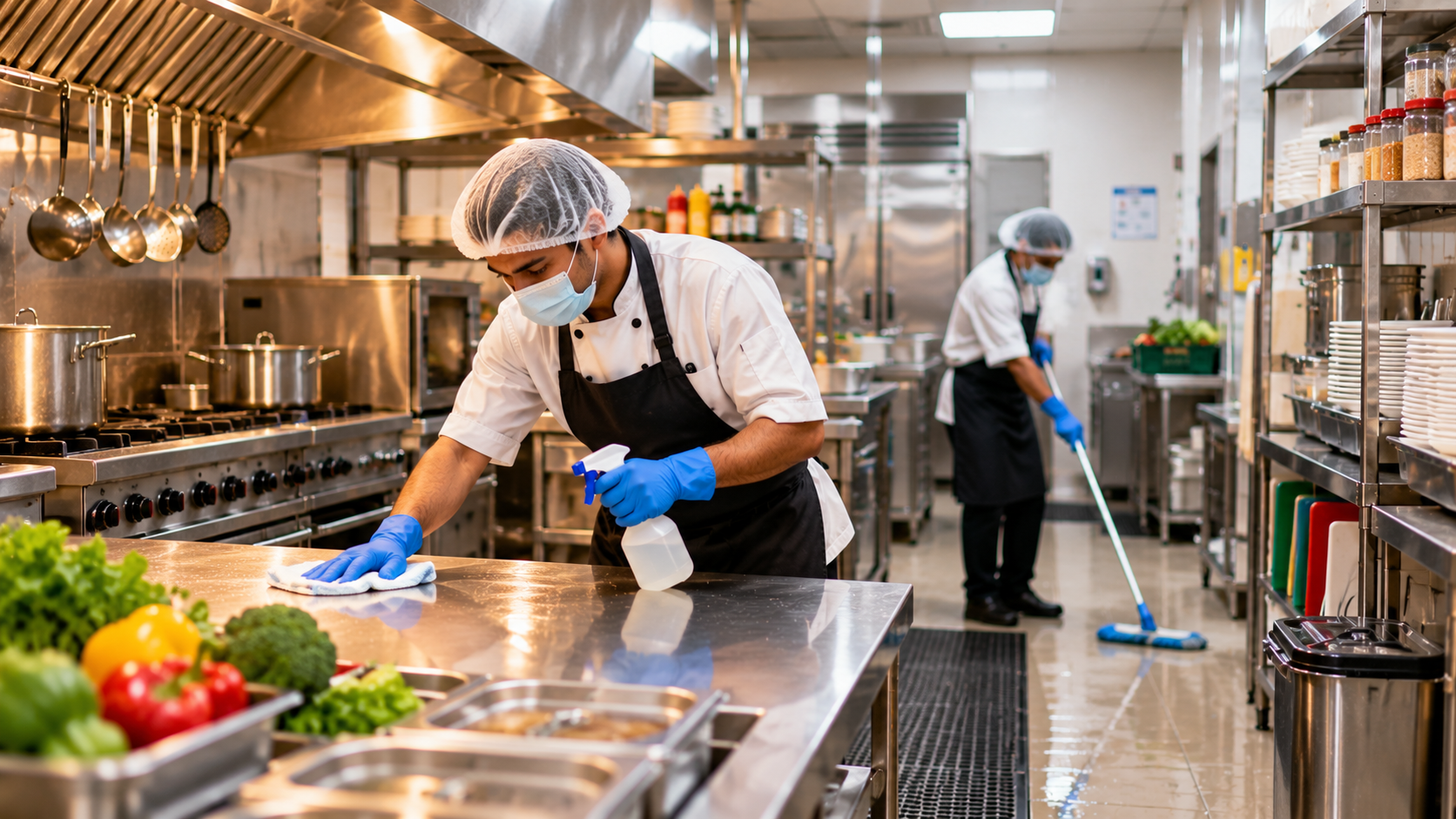
Where Contamination Risks Develop in Commercial Kitchens
Contamination can hide in plain sight inside busy kitchens. Finding these high-risk zones helps maintain a safe working environment.
Food-contact surfaces and preparation equipment
Cutting boards, knives, and food processors often support bacterial growth. immediate and thorough sanitization after each use prevents bacteria from moving between food types.
Floors, drains, walls, and storage areas
Though these areas do not touch food directly, they can harbor pests and mold. Clear drains and dry floors prevent organic matter from building up and attracting unwanted visitors.
Why Cleaning Must Be a Routine Business Practice
Cleaning should be a daily task, not something done only when dirt appears. Adding sanitation to your workflow makes hygiene part of company culture.
Routine procedures help employees find problems before they become serious safety hazards. Making restaurant kitchen hygiene a required habit creates a safer, more efficient workspace for all staff.
How Regular Cleaning Prevents Food Contamination and Illness
Strong sanitation protocols defend your restaurant against invisible threats. High standards of commercial kitchen sanitation lower the chance that pathogens enter the food supply chain. Regular cleaning keeps the facility safe for staff and patrons.
Removing Bacteria, Viruses, Allergens, and Other Hazards
Microscopic hazards, including salmonella and E. coli, thrive in neglected kitchen corners. Deep cleaning removes these threats by sanitizing surfaces where food residue builds up. Thorough cleaning also removes allergens and helps prevent reactions in sensitive customers.
Proper restaurant kitchen hygiene in Pune means more than wiping counters. Use food-safe disinfectants that target viruses and bacteria without leaving harmful chemical residues. This method keeps every workstation free from dangerous contaminants.
Preventing Cross-Contamination Between Raw and Ready-to-Eat Foods
Cross-contamination occurs when bacteria move from raw ingredients to cooked meals. Clear boundaries help stop this dangerous spread. Your kitchen layout should guide food from raw preparation to final plating.
Separate cleaning tools and food preparation zones
Specific areas for raw meat preparation keep juices away from fresh produce. Color-code cleaning equipment, so staff do not use one brush on both a raw prep table and salad station. This visual system helps staff keep foods separate during busy service.
Safe handling of cloths, brushes, and cleaning chemicals
Poorly managed cleaning tools can spread bacteria. Store cloths in sanitizing solutions, and replace them often throughout the day. Keep cleaning chemicals in labeled containers away from food storage areas to prevent accidental poisoning.
Protecting Customers Through Consistent Commercial Kitchen Sanitation
Your commitment to restaurant kitchen hygiene builds diner trust. Customers who see safety as a priority are more likely to return. Consistent sanitation is a daily responsibility that shapes your brand’s integrity.
| Contamination Source | Primary Risk | Prevention Strategy |
|---|---|---|
| Raw Poultry | Salmonella Spread | Dedicated Prep Zones |
| Dirty Cleaning Cloths | Bacterial Transfer | Frequent Replacement |
| Chemical Sprays | Residue Ingestion | Proper Storage Protocols |
| Shared Utensils | Allergen Cross-Contact | Color-Coded Equipment |
These practices create a culture of safety in daily operations. This proactive approach to commercial kitchen sanitation helps your business meet the highest standards for food quality and public health.
How Grease and Built-Up Residue Affect Kitchen Safety
Hidden grease layers can quickly turn a busy kitchen into a dangerous workplace. When fats and oils settle on surfaces, they form a sticky film that traps dust and debris. This buildup threatens staff safety and food quality.
Why Grease Accumulation Creates Fire Hazards
Grease is highly combustible and can fuel kitchen fires. When it builds up inside ventilation systems, a small grill spark can ignite the entire ductwork. Regular removal of these deposits is the best way to prevent catastrophic fire damage.
How Grease Damages Hoods, Filters, Exhaust Systems, and Equipment
Exhaust systems remove smoke and heat from the kitchen. When hardened grease clogs filters, airflow becomes restricted, causing the motor to overheat. This strain can cause costly mechanical failures and poor ventilation throughout the facility.
When routine cleaning is sufficient
Daily maintenance by kitchen staff helps keep surfaces manageable. This includes wiping countertops, cleaning stovetops, and rinsing grease traps after every shift. These tasks stop grime from hardening into stubborn, permanent residue.
When to schedule a kitchen degreasing service
Some areas are impossible to reach without special tools and industrial-grade chemicals. You should hire a professional kitchen degreasing service when you notice thick, black buildup on exhaust fans or inside ductwork. A professional kitchen deep cleaning service is needed when routine cleaning cannot remove slick, oily film from floors and walls.
| Cleaning Type | Frequency | Primary Goal |
|---|---|---|
| Daily Staff Cleaning | Every Shift | Surface Hygiene |
| Professional Degreasing | Quarterly | Fire Prevention |
| Deep Cleaning | Bi-Annually | System Longevity |
Reducing Slips, Falls, Odors, and Pest Activity
Grease on floors creates a serious slip-and-fall hazard for employees. Decaying organic matter in crevices causes foul odors that can reach the dining area. These conditions also attract pests that thrive where food residue remains.
- Eliminate slick floor surfaces to prevent workplace injuries.
- Neutralize persistent odors that affect customer experience.
- Remove food sources that draw cockroaches and rodents.
How Professional Kitchen Cleaning Supports Indian Food Safety Requirements
Professional kitchen management depends on documenting every sanitation effort. Daily records help your establishment meet the high standards expected in the Indian food industry. This proactive approach to commercial kitchen sanitation builds trust with regulators and customers.
Maintaining Records for Cleaning, Sanitizing, and Pest Control
Detailed logs are a key part of maintaining food business kitchen hygiene. They prove that your team follows established safety protocols consistently. Use one central system to track these essential activities:
- Daily surface sanitization logs for food preparation areas.
- Weekly deep-cleaning checklists for heavy equipment and ventilation hoods.
- Monthly pest control service reports and chemical application records.
- Temperature monitoring logs for refrigeration and storage units.
Supporting FSSAI-Aligned Food Safety Practices
Following FSSAI guidelines is both a legal need and a plan for excellent operations. Standard processes reduce human error and show each staff member how to keep the environment safe.
Documented cleaning schedules and assigned responsibilities
Clear accountability supports a successful safety program. Assigning specific tasks to individual staff members ensures that no kitchen area is overlooked. A clear schedule prevents confusion and keeps your team focused during every shift.
Verification of high-risk areas and corrective actions
Regular checks show whether cleaning efforts work. Managers should spot-check high-risk zones, including raw meat preparation stations and drainage systems. Document immediate corrective actions when a lapse occurs to prevent future problems.
| Activity Type | Frequency | Responsibility |
|---|---|---|
| Surface Sanitization | Every Shift | Line Cooks |
| Equipment Deep Clean | Weekly | Kitchen Lead |
| Pest Control Audit | Monthly | Facility Manager |
Preparing for Inspections Without Disrupting Daily Operations
Up-to-date documentation makes surprise inspections routine instead of stressful. Organized logs show your commitment to food business kitchen hygiene whenever inspectors arrive. Prepared staff can keep serving customers while auditors check compliance with commercial kitchen sanitation standards.
Benefits of Hiring a Kitchen Deep Cleaning Service
Daily cleaning matters, but some areas of a professional kitchen need special care. In-house staff alone may miss hidden hazards that threaten food safety and fire rules. A professional kitchen deep cleaning service uses the skills and equipment needed to clean these overlooked areas.
Reaching Difficult Areas Routine Staff Cleaning May Miss
Professional cleaners use special tools to reach complex areas that routine shifts often miss. They sanitize high-risk spaces to prevent lasting damage.
Exhaust hoods, ducts, and ventilation components
Grease buildup in ventilation systems causes many kitchen fires. A specialized kitchen degreasing service removes tough deposits from deep ducts and exhaust hoods.
Cooking lines, refrigeration seals, and equipment interiors
Food particles can collect behind heavy cooking lines and inside refrigeration seals. Professional teams remove these parts to sanitize surfaces and prevent pests and bacteria.
Using the Right Methods for Different Kitchen Surfaces
Different materials need specific cleaning agents to prevent damage and maintain hygiene. Professionals know which methods work best for each kitchen surface.
| Surface Type | Cleaning Method | Key Benefit |
|---|---|---|
| Stainless Steel | Non-abrasive degreasing | Prevents corrosion |
| Ventilation Ducts | High-pressure steam | Fire hazard removal |
| Refrigeration Seals | Food-safe sanitizers | Prevents mold growth |
Balancing Professional Cleaning With In-House Daily Maintenance
A kitchen degreasing service should support, not replace, your daily sanitation routine. Your staff helps keep the workspace clean throughout the day.
- Daily tasks: Wiping surfaces, sweeping floors, and cleaning spills.
- Professional deep cleaning: Periodic, intensive sanitation of hard-to-reach infrastructure.
- Synergy: Combining both approaches ensures long-term compliance and operational efficiency.
Adding a professional kitchen deep cleaning service to your maintenance plan protects equipment and customers. This balanced approach helps your business run safely and smoothly.
Building a Practical Cleaning Schedule for a Commercial Kitchen
A clear cleaning schedule supports every successful food service establishment. Managers can divide tasks by time so restaurant kitchen hygiene stays a priority during service. This plan keeps teams accountable and protects staff and customers.
Tasks to Complete During Every Shift
Each shift should end with a quick reset for the next team. Staff must clear workstation debris and wipe surfaces after food preparation. This step stops organic matter from building up, attracting pests, or harboring bacteria.
During each transition, employees should empty trash bins and replace liners. A clutter-free workspace supports smoother work and lowers accident risks during peak hours.
Daily and Weekly Restaurant Kitchen Hygiene Checks
Strong commercial kitchen sanitation combines daily habits with weekly inspections. A checklist helps workers inspect every area during the busy work week.
Sanitizing food-contact surfaces and utensils
Staff must sanitize cutting boards, prep tables, and food-grade utensils at each day’s end. Approved chemical solutions help neutralize pathogens. Staff should confirm that equipment dries fully before storage, preventing moisture-related contamination.
Cleaning floors, drains, waste areas, and storage zones
Staff should sweep and mop floors daily with degreasing agents to prevent slips. Regular drain flushing prevents blockages and foul odors from spreading through the kitchen. Workers should organize storage zones weekly for clean shelves and proper stock rotation.
Monthly and Periodic Deep-Cleaning Responsibilities
Some areas need intensive cleaning monthly or quarterly, beyond daily maintenance. These areas include spaces behind heavy appliances, exhaust hoods, and walk-in refrigeration units. These tasks support long-term safety and equipment life.
| Task Category | Frequency | Primary Goal |
|---|---|---|
| Surface Sanitization | Every Shift | Prevent Cross-Contamination |
| Floor & Drain Care | Daily | Safety & Odor Control |
| Equipment Deep Clean | Monthly | Fire Prevention & Efficiency |
| Storage Organization | Weekly | Inventory Integrity |
Training Employees to Follow a Consistent Cleaning System
A cleaning system works only when the team follows it. Regular training shows each staff member why sanitation protocols matter. Clear visual checklists help employees stay focused during high-pressure service periods.
Management should use a verification process, such as a sign-off sheet, to confirm tasks are completed correctly. Fostering cleanliness helps businesses maintain high standards and protect their reputation in the competitive food industry.
Conclusion
A safe cooking space depends on daily habits and careful planning. Strong restaurant kitchen hygiene supports every successful food establishment in India.
Regular sanitation protects your brand and helps you follow FSSAI regulations. It also keeps equipment efficient and lowers fire risks from grease buildup.
Good food business kitchen hygiene combines disciplined staff routines with expert care. A professional kitchen deep cleaning service reaches hidden areas and keeps them sanitary.
Your team helps maintain these standards during every shift. Give staff the right tools and training for daily tasks.
Contact certified sanitation experts to schedule your next deep clean. Investing in these services today supports a safer, more profitable future.
About
Maintaining proper restaurant kitchen hygiene in Pune is essential for food safety, employee well-being, and customer satisfaction. Regular cleaning, sanitation, and grease removal help prevent contamination and maintain a safe food preparation environment. Professional kitchen cleaning practices also support compliance with hygiene standards and improve overall kitchen efficiency.
For restaurants and food businesses in Pimpri-Chinchwad (PCMC) and Chakan, a structured kitchen hygiene plan can include deep cleaning, degreasing, sanitization, equipment cleaning, and regular maintenance to keep the kitchen clean and safe. These practices help food businesses maintain consistent hygiene standards and create a safer environment for staff and customers.
