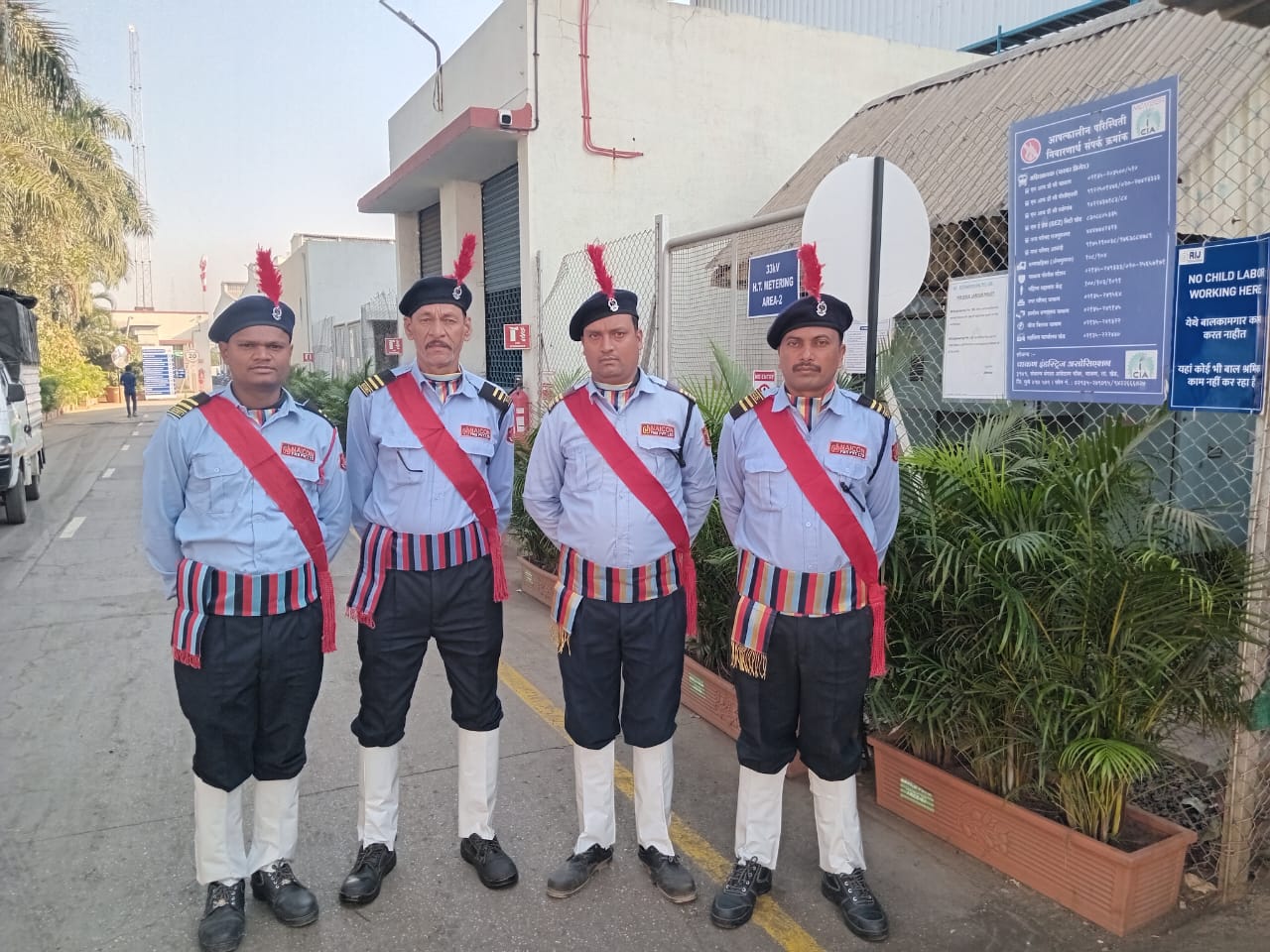
Security plays an important role in protecting people, property, employees, visitors, and business operations. From residential societies and commercial offices to hospitals, warehouses, and industrial facilities, every property has different security requirements.
Understanding the available security services in Pune can help property owners, business managers, and facility administrators make informed decisions. The right security arrangement depends on the property's layout, potential risks, operating hours, access points, and the level of protection required.
This guide explains the main types of security guards, their responsibilities, the difference between armed and unarmed personnel, and the factors to consider when planning security for your premises.
Types of Security Guard Services in Pune
Security personnel perform different duties depending on the environment and the risks involved. Understanding these roles helps organisations determine which type of security arrangement is suitable for their requirements.
1. Unarmed Security Guards
Unarmed security guards help maintain safety through observation, access control, patrolling, and incident reporting. They are commonly deployed in residential societies, offices, schools, retail outlets, hospitals, and commercial buildings.
Their responsibilities may include:
- Verifying visitors and maintaining entry registers.
- Monitoring entry and exit points.
- Conducting routine patrols.
- Reporting suspicious activities.
- Supporting emergency procedures.
- Helping maintain order within the premises.
Unarmed guards are suitable for many locations where a visible security presence, monitoring, and access management are the primary requirements.
2. Armed Security Guards
Armed security guards may be considered for specific high-risk assignments where the deployment is legally permitted and appropriately authorised.
Their deployment requires careful risk assessment, verification of applicable licences and permissions, and compliance with relevant laws and procedures.
Before choosing armed security personnel, organisations should assess whether the level of risk justifies this arrangement and ensure that the provider can meet all applicable legal and training requirements.
3. Residential Security Guards
Residential security guards help maintain safety in housing societies, apartment complexes, gated communities, and residential buildings.
Their duties may include:
- Managing visitor entry and exit.
- Verifying deliveries and service personnel.
- Monitoring vehicle movement.
- Patrolling common areas.
- Recording unusual incidents.
- Supporting residents during emergencies.
The number of guards and the deployment schedule should reflect the size of the property, the number of entrances, visitor traffic, and the residents' security requirements.
4. Corporate and Office Security Guards
Corporate offices require security procedures that protect employees, visitors, business assets, and confidential work environments.
Security personnel may manage reception access, issue visitor passes, maintain entry records, monitor restricted areas, and coordinate with facility management teams.
For offices operating across multiple shifts, the security plan should also define handover procedures, escalation contacts, and arrangements for after-hours access.
5. Industrial and Warehouse Security Guards
Factories, manufacturing facilities, warehouses, and logistics centres often require additional controls for vehicle movement, material handling, restricted areas, and perimeter access.
Industrial security duties may include:
- Checking vehicle entry and exit.
- Recording material movement.
- Monitoring loading and unloading areas.
- Conducting scheduled perimeter patrols.
- Reporting safety or security concerns.
- Following site-specific emergency procedures.
The security plan should be coordinated with the facility's operational and workplace safety requirements.
6. Event Security Personnel
Event security personnel help manage crowds and maintain orderly movement at conferences, exhibitions, private functions, and public gatherings.
Depending on the event, their duties may include entrance management, ticket or pass verification, crowd monitoring, queue management, and coordination with event organisers.
Large events may require a documented deployment plan, clearly defined emergency exits, communication procedures, and coordination with relevant emergency services.
Armed vs Unarmed Security Guards: What Is the Difference?
Armed and unarmed guards serve different purposes. The right choice depends on the assessed risks, legal requirements, and the type of property being protected.
| Factor | Unarmed Security Guards | Armed Security Guards |
|---|---|---|
| Main role | Access control, observation, and patrolling | Specific authorised assignments involving higher assessed risks |
| Common settings | Offices, residential societies, retail premises | Selected high-risk locations where legally permitted |
| Equipment | Communication devices and approved security equipment | Authorised firearms and required safety equipment |
| Key considerations | Training, alertness, supervision, and reporting | Additional licensing, authorisation, training, and legal compliance |
Not every property needs armed security. A professional risk assessment can help determine the appropriate level of protection.
Benefits of Professional Security Services
A well-planned security arrangement can support safer operations and improve the management of access to a property.
1. Improved Access Control
Security personnel can verify visitors, monitor entry points, and maintain access records. These procedures help reduce unauthorised entry and improve accountability.
2. Early Identification of Security Risks
Regular patrols and observation can help identify suspicious activity, unsecured entrances, and other potential vulnerabilities before they escalate.
3. Support During Emergencies
Trained personnel can follow established emergency procedures, notify the appropriate contacts, and assist with evacuation or access management when required.
4. Protection of People and Property
A suitable security presence can help protect employees, residents, visitors, equipment, inventory, and other assets.
5. Better Coordination with Facility Management
Security personnel can coordinate with reception teams, maintenance staff, facility managers, and emergency responders according to documented site procedures.
Security arrangements should be reviewed periodically to ensure they remain suitable for the property's changing needs.
How to Choose the Right Security Solution
Before selecting a security provider, organisations should understand their actual requirements rather than choosing a service based only on price.
1. Assess Your Security Requirements
Identify the areas that need protection, operating hours, number of entry points, visitor volume, and potential risks. A residential society may need visitor management, while an industrial site may require vehicle checks and perimeter patrols.
2. Verify Licensing and Compliance
Check whether the provider holds the applicable and valid Private Security Agencies Regulation Act (PSARA) licence for the relevant jurisdiction. Confirm other applicable statutory and employment compliance requirements before entering into an agreement.
3. Review Staff Training
Ask about training in access control, patrol procedures, communication, incident reporting, and emergency response. Training should be appropriate to the duties assigned to the guards.
4. Understand Supervision and Reporting
Confirm how attendance is monitored, how supervisors inspect the site, how incidents are documented, and how replacement personnel are arranged when a guard is absent.
5. Compare Service Scope and Pricing
Request a written quotation that outlines staffing levels, shifts, supervision, equipment, applicable statutory costs, and additional charges. Compare the full service scope instead of considering the quoted price alone.
6. Check Emergency Procedures
Understand how the provider handles unauthorised access, fire alarms, medical emergencies, and other site-specific incidents. Make sure reporting and escalation responsibilities are clearly defined.
Security Measures That Support Guarding Services
Security guards are most effective when supported by appropriate physical security measures and clearly documented procedures.
Access Control
Use defined visitor verification procedures, authorised access lists, and entry registers where appropriate.
CCTV Monitoring
Install and maintain surveillance systems where needed. Establish procedures for monitoring, reviewing footage, and reporting incidents.
Perimeter Security
Inspect gates, boundary walls, doors, and other access points regularly. Address identified weaknesses promptly.
Incident Reporting
Maintain records of unusual activity, security incidents, corrective actions, and communication with the responsible personnel.
Emergency Preparedness
Document emergency contacts, evacuation routes, escalation procedures, and coordination responsibilities.
Periodic Security Reviews
Review deployment, access procedures, equipment, and identified risks when the property's layout or operational requirements change.
Security Services for Different Industries in Pune
Security requirements vary according to the type of organisation and its operating environment.
- Residential societies: Visitor management, gate security, vehicle monitoring, and common-area patrols.
- Corporate offices: Employee access, visitor registration, restricted-area controls, and after-hours security.
- Manufacturing facilities: Gate checks, vehicle logs, material movement monitoring, and perimeter patrols.
- Hospitals: Entry management, visitor guidance, restricted-area access, and coordination during emergencies.
- Retail and shopping premises: Entrance monitoring, customer-area observation, and incident reporting.
- Warehouses and logistics facilities: Vehicle verification, loading-area monitoring, inventory-related controls, and access records.
Each organisation should develop a security plan based on its own risks, staffing requirements, and operating procedures.
How to Choose Security Services in Pune and PCMC
Before appointing a security provider, assess your property's requirements and verify the provider's applicable licences, staff training, supervision procedures, and emergency response arrangements. Request a written quotation that clearly defines staffing levels, shift timings, responsibilities, and applicable costs.
A security plan should be tailored to the property rather than using the same deployment model for every location.
Organisations looking for professional security personnel can explore Naicon FMS Security Guard Services to learn more about the available service options.
Conclusion
Selecting suitable security services in Pune and Pimpri-Chinchwad (PCMC) requires an understanding of the property's risks, the duties assigned to security personnel, and the procedures needed to maintain a safe environment. Armed and unarmed guards, residential security, corporate guarding, industrial security, and event security all serve different purposes.
Whether you manage a residential society, corporate office, manufacturing unit, warehouse, hospital, or commercial establishment in Pune or PCMC, assessing your requirements is essential. By verifying applicable licensing, reviewing staff training and supervision, and establishing clear emergency procedures, organisations can develop a more appropriate security arrangement.
Naicon FMS offers security and facility management solutions for different organisational requirements. Explore our professional security guard services to learn more about available services and discuss your security requirements.
Frequently Asked Questions
1. What types of security services are available in Pune?
Security arrangements may include unarmed guarding, authorised armed security, residential security, corporate office guarding, industrial security, warehouse protection, event security, and access control. The appropriate service depends on the property's needs and assessed risks.
2. What is the difference between armed and unarmed security guards?
Unarmed guards generally focus on observation, access control, patrolling, and incident reporting. Armed guards may be deployed for specific authorised assignments where legally permitted and justified by a risk assessment.
3. What duties do professional security guards perform?
Their duties may include visitor verification, entry and exit monitoring, routine patrols, maintaining registers, reporting incidents, and following established emergency procedures.
4. How can I assess my property's security requirements?
Review the property's layout, entry points, operating hours, visitor volume, assets, and potential risks. This assessment can help determine the number of guards, shift arrangements, and additional security measures required.
5. Why is security guard training important?
Training helps personnel understand their responsibilities, follow site procedures, communicate effectively, identify potential risks, and respond appropriately to incidents and emergencies.
6. What should I check before appointing a security provider?
Verify the applicable licence, relevant experience, staff training, supervision procedures, emergency protocols, references, written service scope, and applicable costs.
7. Can security guards work alongside CCTV and access control systems?
Yes. Security personnel can coordinate with CCTV monitoring and access control systems to observe activity, verify authorised entry, document incidents, and escalate concerns according to established procedures.
8. How often should a security plan be reviewed?
A security plan should be reviewed periodically and whenever there are significant changes to the property's layout, occupancy, operations, access points, or risk profile.
Security Services in Pune and PCMC
What types of security services are available in Pune and PCMC?
Security services in Pune and Pimpri-Chinchwad (PCMC) may include unarmed guarding, authorised armed security, residential security, corporate office guarding, industrial security, warehouse protection, event security and access control. The appropriate service depends on the property's needs and assessed risks.
Are security services available for businesses in Pimpri-Chinchwad?
Businesses in Pimpri-Chinchwad may require access control, visitor management, routine patrolling, vehicle monitoring and incident reporting. Deployment depends on the site's requirements and the provider's confirmed service coverage.
What security arrangements are suitable for industrial facilities in PCMC?
Industrial facilities may require gate security, vehicle and material movement records, perimeter checks and restricted-area monitoring. The appropriate arrangement depends on the facility's operations and assessed risks.
How do I choose a security provider in Pune or PCMC?
Evaluate applicable licensing, staff training, relevant experience, supervision, emergency procedures, client references and the written service agreement before choosing a security provider.
Can security personnel support residential societies in PCMC?
Security personnel can support visitor verification, gate management, delivery checks, vehicle monitoring and routine patrols, depending on the agreed scope of service.
Should security requirements be assessed separately for Pune and PCMC locations?
Yes. Each property's layout, visitor traffic, operating hours and risk profile can differ. Assessing each site separately helps determine suitable staffing, shift arrangements and security procedures.
